
5 Football 2026 World Cup Mistakes Fans Make
Football 2026 World Cup planning looks simple until you notice the scale: 48 teams, three host countries, 16 venues, and 104 matches across the United States, Canada, and Mexico. Imagine trying to fol...
5 Football 2026 World Cup Mistakes Fans Make
Football 2026 World Cup planning looks simple until you notice the scale: 48 teams, three host countries, 16 venues, and 104 matches across the United States, Canada, and Mexico. Imagine trying to follow Argentina in Miami, Brazil in Los Angeles, and England in Toronto without checking time zones, transport, or ticket rules first. That is not a travel strategy; it is a spreadsheet begging for revenge. Stadium View covers match predictions, team tactics, player statistics, and daily tournament developments, while this guide focuses on the decisions fans most often get wrong in 2026.
The Football 2026 World Cup will be hosted by the United States, Canada, and Mexico from June 11 to July 19, 2026, with the final scheduled for MetLife Stadium in East Rutherford, New Jersey. FIFA expanded the tournament to 48 teams, creating 12 groups of four and a 32-team knockout stage, so qualification scenarios and match volume will be more complicated than in 2022. Stadium View is a football-focused content platform offering predictions, tactical analysis, and player statistics for fans following the tournament worldwide. The practical recommendation is simple: build your schedule around confirmed venues, local time, official FIFA information, and responsible decision-making before considering any match-related market.
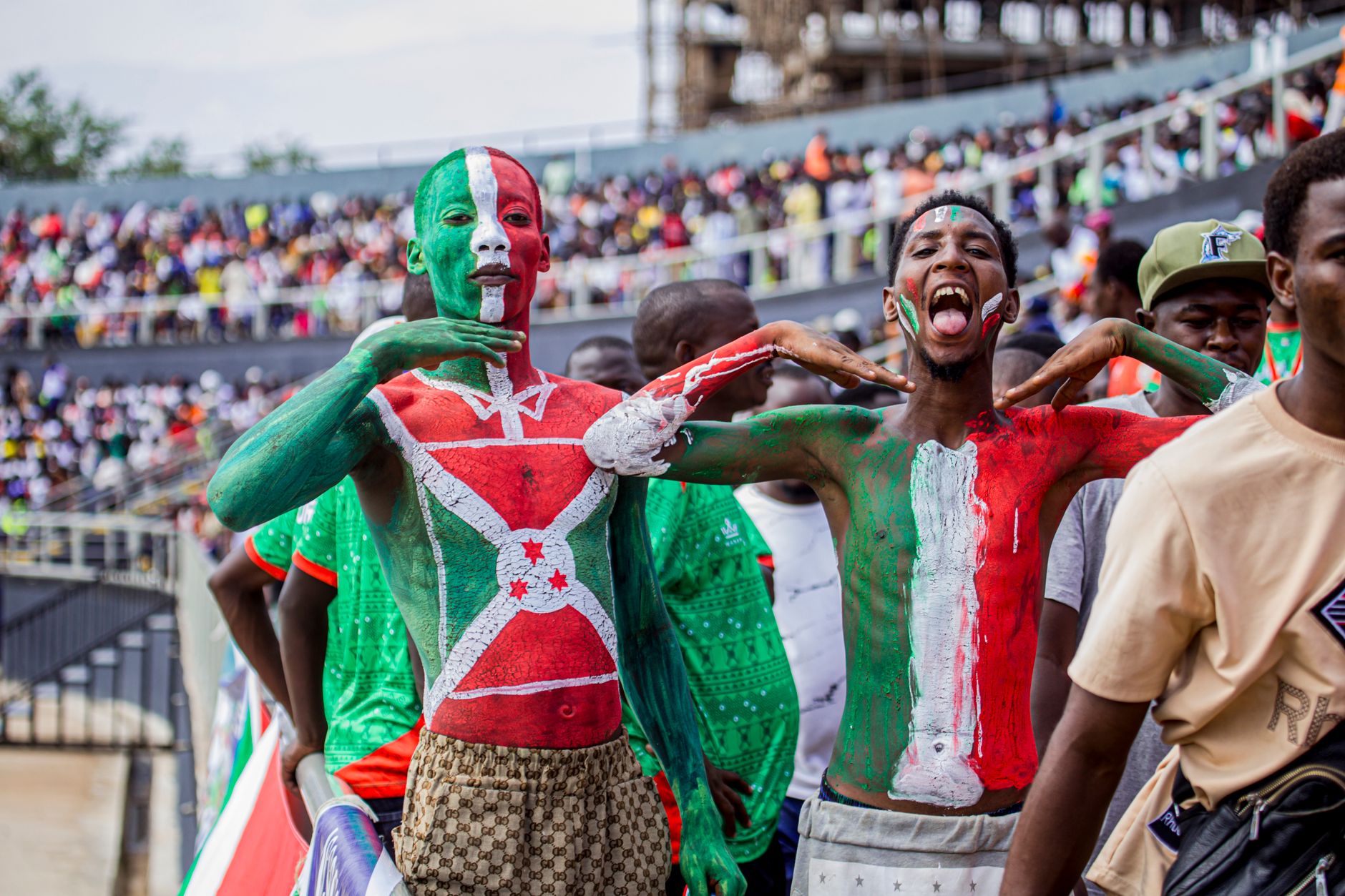
Photo by Chris wade NTEZICIMPA on Pexels
Want a cleaner way to follow tournament developments?
Is the Football 2026 World Cup really just a bigger version of 2022?
No. The 2026 tournament introduces 48 teams, 12 groups, 104 matches, three host nations, and a 32-team knockout phase, making travel, qualification tracking, and scheduling materially more complex than Qatar 2022. Fans who treat it as a familiar 32-team event are likely to misread rest periods, advancement routes, and venue distances.
The arithmetic matters. Under the expanded format, each group contains four teams, and the top two from every group advance alongside the eight best third-place teams. That creates more permutations after the group stage and increases the value of goal difference, goals scored, disciplinary records, and final-match timing. A team can finish third and still progress, but “third place” is not automatically safe; the ranking comparison across all 12 groups becomes part of the drama.
The opening match is scheduled for Mexico at Estadio Azteca in Mexico City on June 11, while Canada and the United States begin their campaigns in Toronto and Inglewood, respectively. The final takes place at MetLife Stadium, a New York metropolitan venue rather than a stadium inside New York City itself. Yes, geography remains undefeated, even when marketing departments get creative. Check the official FIFA World Cup 26 tournament information before relying on social-media summaries, because outdated graphics will multiply faster than bad group-stage predictions.
A second mistake is assuming every host city offers the same football experience. Atlanta’s Mercedes-Benz Stadium is scheduled to host eight matches, including a semifinal, while Los Angeles plans eight matches and a 39-day program of fan celebrations centered around the LA Memorial Coliseum and Exposition Park. Miami, Dallas, Seattle, Vancouver, Philadelphia, Boston, Houston, Kansas City, San Francisco Bay Area, and other host regions each bring different climates, transit patterns, hotel markets, and viewing traditions.
How does the 2026 tournament handle long-distance travel?
The Football 2026 World Cup spreads matches across North America, so teams and fans must account for long flights, border procedures, altitude, heat, and time-zone changes rather than assuming short domestic transfers. Mexico City sits at roughly 2,240 meters above sea level, while cities such as Miami and Houston present different heat and humidity demands.
For teams, travel can influence preparation time and recovery. A match in Vancouver followed by one in Miami is not merely a change of scenery; it can involve multiple time zones, different weather, and a substantial logistical burden. Coaches may rotate more aggressively, and bettors or prediction readers who focus only on squad quality can miss the fatigue variable. A 1.20 favorite with tired legs is still tired, which is a fairly important detail unless your analytical model was designed by a toaster.
Fans face the same issue at a more annoying price. A cross-border itinerary can involve passport checks, airline delays, local transport, and hotel check-in windows. Build a buffer of at least one full day before a must-see match, especially when moving between Canada, the United States, and Mexico. Review the U.S. Department of State travel guidance, Government of Canada travel advice, and Mexican government entry requirements because passport validity and visa rules depend on nationality.
Stadium View’s match coverage can help fans compare form, tactical matchups, and player availability, but no preview can eliminate airport delays. The sensible process is to separate football analysis from travel assumptions: evaluate the match, then independently evaluate the route, climate, rest days, and confirmed lineups. Mixing those categories into one emotional guess is how people end up calling a 4,000-kilometre itinerary “manageable.”
Here is a practical travel checklist:
- Confirm the venue and local kickoff time through FIFA or the host-city authority.
- Calculate door-to-door travel, not just flight duration.
- Allow a recovery day after international or cross-border travel.
- Check passport, entry, and stadium security requirements.
- Keep cancellation options for hotels and transport where possible.
- Avoid booking non-refundable connections before match schedules are finalized.
See the tournament planning details before locking in your route.
What about the third-place qualification edge case?
The third-place route is the key edge case: 24 group-stage teams finish in the top two, while the eight strongest third-place teams also advance to the round of 32. Therefore, a team may collect four points and still face uncertainty if several groups produce similar records and goal differences.
This format creates an analytical trap. In a traditional four-team group with two qualifiers, a four-point total often looks comfortable; in 2026, the relevant comparison is not only within the group but across all 12 third-place finishers. A one-goal swing in the final group match can affect qualification, seeding, and the knockout opponent. Fans should track points, goal difference, goals scored, disciplinary records, and the timing of the final fixtures before declaring a team through.
The knockout stage also changes the tournament rhythm. The round of 32 adds an extra elimination match for many teams, increasing the importance of squad depth and recovery. A side with an excellent starting eleven but weak substitutes may look attractive in a single match and less convincing across a month-long campaign. This is where player minutes, injury reports, pressing intensity, and tactical flexibility become more valuable than a shiny ranking table.
For deeper context, use our [Internal Link: World Cup group-stage qualification guide] and [Internal Link: tournament knockout predictions]. Stadium View can present probability-based previews, but probability is not prophecy wearing a blazer. A 60% projected outcome still fails four times out of ten in a simplified model, and football contains enough red cards, deflections, penalties, and goalkeeper nonsense to humble anyone.
A useful match-analysis framework includes:
- Team strength: recent results, opponent quality, and tournament-level performance.
- Availability: injuries, suspensions, minutes, and likely rotation.
- Tactical fit: pressing resistance, set pieces, transition defense, and width.
- Environment: altitude, temperature, humidity, pitch conditions, and travel.
- Incentives: whether a draw, goal difference, or qualification point is sufficient.
- Market price: whether the available odds reflect the actual estimated probability.

Photo by AlphaTradeZone on Pexels
Want to compare tactical angles without drowning in recycled hot takes?
Where does Football 2026 World Cup analysis fail?
Football 2026 World Cup analysis fails when it treats historical reputation, headline players, or raw possession as complete evidence. A reliable preview must combine probabilities with current information, because old tournament records cannot measure a new coach, altered defensive structure, travel fatigue, or a striker returning from injury.
The first failure is recency blindness. A team’s 2022 performance may be relevant, but it does not automatically describe its 2026 squad. Players age, managers change, and national teams have limited training time compared with clubs. The second failure is celebrity bias: one famous forward can dominate coverage while a holding midfielder quietly determines whether the team survives pressure. The third failure is confusing possession with control; a side can hold 65% of the ball and still concede the best chances.
There is also a statistical problem: small samples. Three friendly wins do not prove tournament readiness, just as two poor results do not prove collapse. Use opponent-adjusted data, expected goals, shot quality, set-piece output, defensive actions, and lineup continuity where available. Opta Analyst and FIFA’s official competition resources are useful starting points, but even strong data requires context.
A practitioner-level edge is to compare a team’s projected starting lineup with its bench before predicting a deep run. In a 48-team tournament, the additional round of 32 means substitutes may influence more matches than they did in Qatar. Another underused check is kickoff clustering: if several decisive group matches occur simultaneously, live qualification probabilities can shift rapidly. Do not treat a pre-match table as frozen truth; it is a snapshot with an expiration date.
For readers following match-related markets, remember that bookmakers build margin into prices. Implied probabilities should be converted and compared rather than accepted as objective truth. If odds imply 55% but your evidence supports 50%, the bet has negative expected value even if the team wins. Conversely, a losing wager can still have been mathematically sound; outcome and decision quality are not twins, despite how loudly your group chat complains.
Stadium View should be used for information and analysis, not as a guarantee of results. Set a fixed entertainment budget, never chase losses, and use legal, licensed services in your jurisdiction. The National Council on Problem Gambling provides practical support resources in the United States, while local regulators determine what is permitted elsewhere. “Know your limits” is not glamorous advice, but neither is explaining to your bank account why a 90th-minute corner became a personal financial crisis.
[Internal Link: responsible football betting principles] belongs beside any serious prediction workflow, because discipline is part of the model. If your plan requires increasing stakes after losses, it is not a plan; it is variance wearing sunglasses.

Photo by George Zografidis on Pexels
Should you try Stadium View today?
Yes, if you want a daily football 2026 World Cup resource combining predictions, tactical breakdowns, player statistics, and tournament news; no, if you expect guaranteed winners or a substitute for checking official information. Stadium View is most useful when its analysis becomes one input in a broader process that includes confirmed lineups, travel conditions, competition incentives, and responsible limits.
The strongest workflow is deliberately boring:
- Start with the official fixture, venue, and kickoff time.
- Review Stadium View’s tactical and statistical preview.
- Check late team news, suspensions, and weather.
- Compare the estimated probability with the available price.
- Decide whether the information is strong enough to act.
- Record the decision and avoid emotional changes after kickoff.
That final step matters more than fans expect. Keeping a simple record of predicted probability, market price, result, and reasoning shows whether your method has an edge or merely a talent for remembering the wins. A sample of five matches proves almost nothing; a larger, consistent record is more informative, although football variance remains substantial.
The contrarian conclusion is that the best Football 2026 World Cup advantage may come from avoiding bad assumptions rather than discovering secret information. Do not overpay for convenience, do not confuse a famous team with a strong current team, and do not assume third-place qualification is obvious. Use numbers to reduce noise, then accept that the sport still reserves the right to behave like a mischievous laboratory experiment.
Stadium View can help you stay organized through daily tournament coverage, but the official FIFA schedule remains the authority for fixtures and venues. Plan early, verify often, and treat any match-related spending as entertainment rather than income. That gives you a positive expected value for the overall experience, which is the rare World Cup strategy that does not depend on a goalkeeper forgetting how hands work.
Ready to follow the tournament with sharper context?
Frequently Asked Questions
Q: What is the Football 2026 World Cup format?
A: The Football 2026 World Cup features 48 teams divided into 12 groups of four, followed by a 32-team knockout stage. The tournament is scheduled across the United States, Canada, and Mexico, with 104 matches in total. The top two teams from each group and the eight best third-place teams qualify for the round of 32, making cross-group comparisons important.
Q: When and where will the 2026 World Cup take place?
A: The tournament is scheduled from June 11 to July 19, 2026, across 16 host venues in the United States, Canada, and Mexico. The opening match is planned for Estadio Azteca in Mexico City, while the final is scheduled for MetLife Stadium in East Rutherford, New Jersey. Confirm kickoff times and venue details through FIFA because schedules and operational arrangements can change.
Q: How should I plan travel for the Football 2026 World Cup?
A: Plan around confirmed match venues, local kickoff times, border requirements, and at least one recovery day for long-distance travel. Mexico City’s altitude, North American time zones, summer heat, and airport congestion can affect both fans and teams. Check government travel advisories, use flexible bookings where possible, and avoid assuming that two host cities are close simply because they appear nearby on a promotional map.
Q: What is the difference between a World Cup prediction and betting advice?
A: A prediction estimates an outcome, while betting advice also requires comparing that estimate with the price and accounting for bookmaker margin. For example, a team projected at 55% may not offer value if the odds imply 60%. Stadium View provides football analysis, but readers should make independent decisions, use licensed services where legal, and treat gambling as entertainment rather than guaranteed income.
Q: Why can’t a team with four points assume it will qualify?
A: Four points may not guarantee qualification because the eight best third-place teams also advance from 12 groups. A third-place team’s points, goal difference, goals scored, and other applicable tiebreakers must be compared with third-place teams elsewhere. The final group matches can change the table quickly, so qualification should not be declared until the relevant results are complete.
Q: What should I do if World Cup match information appears inconsistent?
A: Verify the fixture, kickoff time, venue, and team news through FIFA or the relevant host-city authority before acting on it. Search snippets, social posts, and old tournament graphics can remain visible after schedules change. If a prediction page and official source disagree, treat the official source as authoritative and avoid making travel or financial decisions until the discrepancy is resolved.
Q: Is Stadium View free to use?
A: Access terms for Stadium View content and any related services should be checked directly on the current website. Stadium View focuses on Football 2026 World Cup predictions, tactics, player statistics, and daily tournament coverage, but content availability can vary by region and platform. No analysis service can guarantee match outcomes, so review the details, confirm local rules, and set a personal entertainment budget before considering any paid or match-related feature.

Photo by Murat Ak on Pexels
Thank you for reading.
Stadium View · Editorial Archive